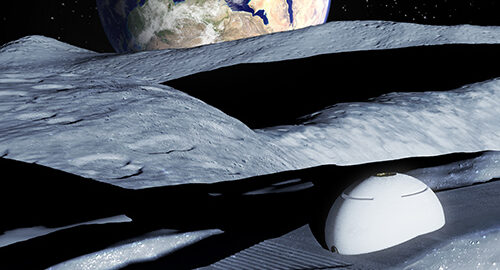
the gods need not take our sight …
[updated 5-19-2025]
we scale ourselves …
in moving from low to high,
we see our pathway as true,
and that we are in the right.
yet forever left nearby,
as if they are out of view,
still the shadows of the night
whether heaven or haven
will ever erase our blight,
our myths impel us even
further on a cosmic flight
[refrain]
contemplate views from the site
the infinite in your sight
a temporary delight
the peak of eternal light
like Sisyphus for his wrongs,
while the summit’s view rivets,
we cannot stay at such height,
it’s not where our soul belongs,
just for brief tourist visits
the peak of eternal light
Copyright © 2025 John P. Healy
Author’s notes
.1. Re “we scale ourselves ,” the word scale has multiple senses, some of which are:
- Scale as in “climb” (or ascend or evolve) ourselves, as in “ascending lord of neoteny.”
- Scale as in “weigh” (or measure) ourselves in some moral framework, or as worthy of salvation.
- Scale as in growing (or expanding) in 10^n scope, as in expanding from tribe to village to … state (nation), planet, solar system … and beyond – both in our occupancy and vision.
.2. The title (“the gods need not take our sight“) questions some (personal) eschatological tropes. Whether some supernatural framework need hold sway over all moral purpose and devotion. A worldview in which the “gods” grab or compel our attention, thereby taking away our sight of things – turning a blind eye to all doubt & nuance. Reality hijacked by a black & white landscape.
And absorbed in a doctrine of heaven – as a place or existence bathed in light and crystalized delight (particularly for the chosen, elect, or worthy). Or absorbed in a utopian haven – as a place glowing with peace and abundance for all (maybe, eh). In either scenario, a fixed, final state or arrival or achievement (whether personal or collective).
.3. There’s a stair-step structure to the stanzas (particularly the first & third), with spaced rhyming lines. As if on a ladder or a set of stairs.
.4. I hope to build out this poem. For example, with a “litany” for mounting a temple’s stairs (as noted in the References). Or possibly a “homily” about entangled lighthouses & beacons as helping guide the way.
References & credits
.1. Recently, screenwriter Jeff Patton introduced me to the topic “peaks of eternal light.” An unpublished novel by a friend in his writer’s circle is titled “Peak of Eternal Light,” a story set on a near future moonbase.
.2. Website articles
• Science Direct > Space Policy > “The peaks of eternal light: A near-term property issue on the moon” in Volume 38, November 2016, Pages 30-38.
Peaks of eternal light
The “Peaks of Eternal Light” are highland regions near the lunar poles that receive sunlight virtually all of the time. I.e. they are (almost) never shadowed by other parts of the Moon. The existence of such peaks was first hypothesized by Beer and Mädler (1837, p.16). Over 40 years later [1879], the popular science writer, Camille Flammarion gave them their poetic name: “montagnes de l’éternelle lumière” (translated as “peaks of eternal light”). The small tilt of the Moon’s spin axis …
• Wiki > Peak of eternal light (PEL)
Detailed lunar topography collected by the Lunar Reconnaissance Orbiter (LRO) suggests that no points on the Moon receive perpetual light during both the winter and summer. However, there are points on crater rims which have very extended periods of sunlight.
This study [based on images from the Clementine lunar mission and data from the SELENE spaceprobe] found that two points only ~8 km from each other along a straight ridge extending from Shackleton Crater at the Lunar South Pole are illuminated a combined ~94% of a lunar year.
The data set from Lunar Reconnaissance Orbiter shows that some sites on the rim of Shackelton remain illuminated for 94% of a lunar year.
In culture
Moon Temple planned for a peak of eternal light on Shackleton crater’s rim to address future needs (such as spiritual accommodation) of people living on the Moon.
2017 — European Space Agency artist in residence Jorge Mañes Rubio created initial design.
2018 — corresponding artifacts were created by the ESA Advanced Concepts Team.
• ACE Humans on Instagram (Jorge Mañes Rubio)
Sep 20, 2020 — … of the Moon, with unique lighting conditions, featuring peaks of eternal light on its rim and perpetual darkness i…
[excerpt]
[In 2017] I decided to contact the European Space Agency ESA and convinced them to set up a position for me as an artist in residence at their Advanced Concepts Team. It was no surprise that I decided to focus on the Moon and the concept of the ‘Moon Village’ that was back then proposed by ESA’s Director-General. … the history of human exploration is a brutal one, synonymous with unfair distribution of power, aggressive colonization and exploitation of people, land and resources. … So I tried to imagine a future where none of these patterns is repeated and instead focused on how personal narratives and diverse ways of knowing could be projected on the Moon.After a few months, I proposed to the European Space Agency the idea of building a temple on the Moon. A temple to promote a more sustainable, responsible, and spiritual approach to the future colonisation of the Moon. The Moon Temple stands on the rim of the Shackleton crater … featuring peaks of eternal light on its rim and perpetual darkness inside the crater. It’s truly an otherworldly place, a place where I imagine we’ll be able to feel something bigger than us, older than us.
• ESA > Moon Temple – Artist Jorge Mañes Rubio, part of ESA’s future-oriented Advanced Concepts Team (ACT), has designed a place of contemplation to serve a future lunar settlement (1-25-2017)
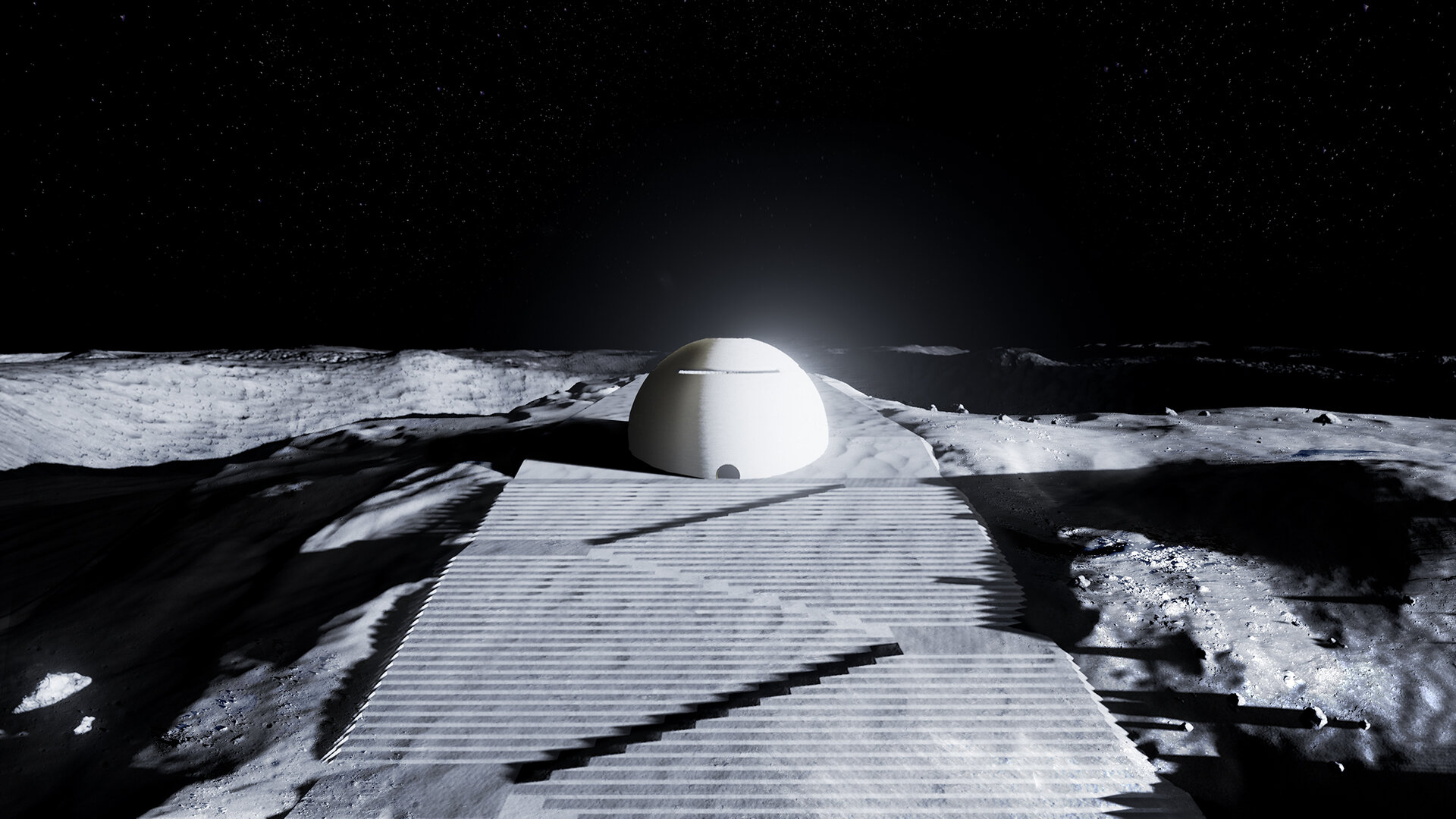
• designboom > “jorge mañes rubio envisions ‘the moon temple’ for future space civilizations” (1-10-2017) – see video visualization of temple
• Jatan’s Space > Poems: Space dreams
[excerpt]
We dream, we mustWe dream, we must!
Or risk our species blown to dustFor a future that lies beyond the sky,
the time to act is nighAn orchestrated descent on the Moon,
and an iterative rendezvous with an asteroidBudge on with your dream,
and get past the crater’s rim…
With your perseverance and might,
leap all the way to peaks of eternal light.
• Scientific American > Peaks of Eternal Light
Not far from home, on our own moon, a unique condition exists (below). Discovered in 1994 on Peary crater near the north pole, the so-called peaks of eternal light are the only known region in the solar system where the sun never sets. (Other such regions may exist on Mercury but have not been seen yet.) This unusual condition arises because the moon’s rotational axis is barely tilted relative to the plane of its and Earth’s orbit around the sun. Certain to become a tourist attraction, this site may one day also house the first moonbase. Temperatures in the area fluctuate comparatively little, perhaps by 20 degrees, making it an ideal place to settle. The possibility of water ice here is an added bonus.
How do we deal with “edge cases?” When the range of circumstances is unknowable … When the promised peak – the mountaintop measure of purpose – proves to be a false one … when the trail winds further into the unknown … when complex connections cast shadows on consequences … when the chase brings no clarity … Will the way forward be met with warring claims or voices of curiosity?
• The Conversation > ‘Project Hail Mary’ demonstrates how intellectual humility can be a guiding force for scientists and astronauts by Deana L. Weibel (3-31-2026) – Being open to awe and willing to be humbled by it isn’t weakness but strength.
As so often in history, the 21st century is framed by a tale of creeds – a gospel of nostalgia and a gospel of progress. Was this part of the Victorian era as well? [1,2]
Will humanity helm its own narrative – as caretaker of a collective commons? Or, will that agency be outsourced to oligarchic overlords? To de facto demigods. A precarity in which our purpose is reduced to utilitarian T&C. Higher truths reduced to trade as proxy for the divine. Purposed for a commercial order, an order in need of intellectual humility.
• Rolling Stone > The Rise of the Digital Oligarchy by Jonathan Taplin (March 29, 2026) – Will humanity remain the author of its own story?
(quote, originally a single paragraph)
(quote)
Notes
[1] Google: was the Victorian era characterized by a gospel of progress?
AI Overview
Yes, the Victorian era was deeply characterized by a “gospel of progress,” which functioned almost as a substitute religion for many, emphasizing relentless improvement in technology, morality, and social conditions. This optimistic dogma was driven by rapid industrialization, scientific advancements, and a strong middle-class belief in reform.
Core Tenets of the Victorian Progress Narrative
• Scientific and Technological Triumph: The era saw unprecedented mechanical progress, including the expansion of railways, the telegraph, and breakthroughs in medicine and engineering. The Great Exhibition of 1851 famously showcased Britain as “the workshop of the world”.
• Moral and Social Reform: Progress was not limited to machines; there was a powerful emphasis on improving personal behavior and society through charity, self-discipline, and controlled habits. Evangelical Christianity and utilitarianism aligned to promote social reforms, such as improving working conditions and education.
• Imperial Expansion: The belief in progress fueled imperialism, as Britain sought to spread its industrial and moral values globally.
Paradoxes and Critiques
Despite this overwhelming belief in advancement, the era was also characterized by “unrest” and deep anxieties.
• Scientific Conflict: Advancements in science, particularly Darwin’s theory of evolution, created tension between traditional religious beliefs and new scientific understanding.
• Social Realities: The rapid industrialization brought “new horrors” to the factory system, creating severe socioeconomic disparities that persisted despite reform efforts.
• Cultural Hesitation: Literary figures and intellectuals often questioned whether technological progress actually improved the quality of human life, leading to a complex self-consciousness about the true nature of their age.
[2] Google: was there any nostalgic reaction to the optimism of the Victorian era?
AI Overview
Yes, there was a significant nostalgic reaction to Victorian optimism, primarily emerging within the era itself as a counter-reaction to rapid industrialization and modernization. Authors, artists, and reformers often looked back with longing to a pre-industrial “Golden Age” to cope with the anxiety, environmental change, and social shifts of the 19th century.
• Internal Nostalgia (19th Century): The fast-paced technological advancements (railroads, factories) led many Victorians to feel a sense of loss, driving a “nostalgia for the past”. Literary figures like Tennyson and Ruskin often represented this, viewing the past as more peaceful or virtuous.
• The Reaction Against Sentimentality: Conversely, some later Victorians (like Oscar Wilde) reacted against the era’s overt sentimentality, arguing it required a “heart of stone” to not laugh at its excesses, marking a shift away from high Victorian optimism.
• Modern Nostalgia (20th-21st Century): Today, nostalgia for the Victorian era often highlights a “Golden Age” of imperial power, steam-trains, and distinct craftsmanship, frequently stripping away the realities of the period’s profound anxiety and inequality.
• Ideological Nostalgia: The era is sometimes nostalgicized in conservative political thought, focusing on Victorian wealth creation and civic virtue.
Nostalgic Victorian fiction was highly versatile, ranging from sentimental literature to adaptations that re-imagined the period’s chaotic progress as a more orderly, “better” time.