
[Draft 5-24-2026]
A Clear Way for LA
sweeping away homelessness
by nobody+0
Act I: The Visual Fix
Marcus Vance knew how to frame a shot. It was a skill honed over a decade running a boutique Westside public relations firm before he realized that the city of Los Angeles was just a massive, poorly managed brand waiting for a reface. At forty-two, with a shock of prematurely silver hair and an uncanny ability to look intensely listening even when he was calculating his next tweet, Marcus had coasted into the mayor’s office on a wave of pure, unfiltered optimism.
His campaign slogan had been painted in bold, sans-serif font across a hundred billboards: A Clear View for LA.
To the voters in Bel-Air and Hancock Park, it meant clearing the tents. To the voters in Echo Park and Venice, it meant compassion, progress, and modern efficiency. Marcus didn’t see the contradiction. To him, politics was a design problem. The city was beautiful; its presentation was simply cluttered.
On his hundredth day in office, Marcus stood on the steps of City Hall, flanked by the chiefs of the LAPD and the Department of Sanitation. The morning sun was hitting the civic center perfectly, glinting off the aviator sunglasses tucked neatly into his tailored suit pocket.
“For too long, our city has accepted the unacceptable,” Marcus announced to the bank of microphones. His voice carried that effortless, late-night radio warmth. “We have allowed our unhoused neighbors to live in conditions that degrade their dignity, while robbing our communities of their public spaces. Today, the passivity ends. We are launching Operation Fresh Start. No more tents. No more tarps. We are restoring the sidewalks of Los Angeles.”
Behind the press line, a woman in a faded, high-visibility vest shook her head. Her name was Dr. Maya Lin, a street medicine specialist who had spent twelve years treating infections, managing psychoses, and building fragile networks of trust across the encampments of Hollywood and the concrete banks of the LA River. She had attempted to brief Marcus three times during the transition. Each time, she had been handed off to a twenty-four-year-old staffer named Chloe, who took notes on an iPad and promised that the mayor was “deeply committed to data-driven outcomes.”
“Mr. Mayor,” Maya called out, her voice cutting through the polite murmurs of the press corps. “Where are they supposed to go? Your temporary shelters are already at ninety-eight percent capacity.”
Marcus didn’t blink. He locked eyes with her, offering a practiced, empathetic nod—the one that suggested he felt her pain personally. “We are connecting them to services, Doctor. But we cannot allow the street to be a waiting room. Thank you.”
By noon, the flatbed trucks were rolling.
The strategy was a masterclass in bureaucratic choreography. LAPD formed a perimeter, sanitation workers in white hazmat suits moved in with industrial trash compactors, and social workers from the city’s outreach teams handed out glossy, double-sided brochures detailing a helpline number.
Marcus watched the first sweep from a safe distance, framed nicely against the backdrop of the Venice boardwalk. A drone overhead captured the dramatic transformation: a block lined with weathered blue tarps and shopping carts was systematically dismantled, power-washed, and left gleaming under the California sun within three hours.
Chloe showed Marcus the split-screen video on her phone as they rode back to City Hall in the belly of an armored SUV.
“Look at the engagement metrics on TikTok, boss,” Chloe beamed. “Up four hundred percent. Even the Glendale NIMBY groups are sharing it. You look decisive. You look like the guy who finally did it.”
Marcus smiled, leaning back into the leather seat. “It’s about connecting the dots, Chloe. People just wanted to see action.”
He hadn’t connected a single dot. He had simply erased the lines.
Act II: The Scatter Effect
The problem with sweeping a problem under the rug is that the rug eventually bulges.
By week three of Operation Fresh Start, the sidewalks of Venice, Skid Row, and Hollywood were pristine. The local news run was ecstatic. Business owners on the boardwalk were buying ad space to praise the mayor’s “courage.”
But in the underbellies of the city, the system began to short-circuit.
Maya Lin sat in her mobile clinic van, staring at an empty clipboard. For three days, she had been looking for a patient named Arthur—a sixty-two-year-old schizophrenic man with a severe, weeping diabetic ulcer on his left shin. For two years, Arthur had lived at the corner of 3rd and Rose. Maya knew exactly where to find him every Tuesday at 10:00 AM to change his dressings and administer his antipsychotic medication.
Now, 3rd and Rose was an empty stretch of gray concrete, guarded by a newly installed, decorative planter box filled with drought-tolerant succulents.
“They took everything, Doc,” a voice called out from the shadow of an overpass a mile away. It was Teresa, a young woman who used to camp near Arthur. She was sitting on a milk crate, her remaining belongings stuffed into two plastic grocery bags. “The trucks came at six in the morning. They said we had fifteen minutes. Arthur panicked. He ran toward the freeway. Left his insulin in the cooler. They threw the cooler in the crusher.”
“Where is he now, Teresa?” Maya asked, a knot of cold fury tightening in her stomach.
“Don’t know,” Teresa whispered, looking at the traffic roaring above them. “Everybody scattered. Some went into the alleys. Some went down into the storm drains. We’re just ghosts now, Maya. You can’t see us, so we don’t exist.”
The scatter effect hit the city like a slow-moving, invisible poison.
By week five, the visual cleanliness of the main corridors began to crack under the weight of an unseasonable, brutal mid-July heatwave. Temperatures in the basin soared to 104 degrees. Deprived of the rudimentary shade of their tarps and tents, and pushed out of public parks into hidden, unshaded industrial zones, the unhoused population began to drop.
The emergency rooms at County-USC Medical Center and UCLA Medical were the first to feel the pressure. Ambulances were backed up for blocks, unable to discharge patients suffering from severe dehydration, heatstroke, and infected wounds that had festered in the hidden corners of the city. Because the encampments had been broken up, the city’s precarious street-medicine and food-distribution networks were entirely blind. Nobody knew who was where.
Marcus Vance was in the middle of a high-donor luncheon at a rooftop restaurant in Century City when his personal phone buzzed. It was an unlisted number.
“Marcus,” a voice said without introduction. It was Chief Martinez of the LAPD. He sounded uncharacteristically frayed. “We have a situation downtown. The Metro stations. They’re flooded.”
“Flooded?” Marcus frowned, stepping away from a developer who was explaining a new mixed-use zoning proposal. “It’s July, Roberto. It hasn’t rained in three months.”
“Not water, Marcus. People. Thousands of them. They’ve moved down into the subway tunnels and platforms to escape the heat. It’s a subterranean city down there. The transit authority is shutting down the Red Line. They’re saying it’s a massive fire and safety hazard. And Marcus… the Department of Public Health just declared a localized Hepatitis A outbreak in the alleys behind Alameda. The sanitation teams won’t go in without armed escorts.”
Marcus felt a sudden, sharp drop in his chest. “Well… put them in the shelters, Roberto. Use the emergency overflow.”
“The shelters have been full since day two, Marcus,” Martinez said, his voice flat. “You knew that. We all knew that.”
Act III: The Mirage Shatters
The turning point did not happen in a boardroom or on a cable news segment. It happened on live television, during what was supposed to be Marcus’s coronation.
To distract from the growing murmurs of a public health crisis, Marcus’s team had organized a ribbon-cutting ceremony for a newly revitalized public park in East Hollywood. The park had previously been home to a community of forty unhoused individuals; now, it featured a manicured lawn, a modern playground, and a perimeter of heavy wrought-iron fencing.
Marcus stood before the cameras, his smile slightly tighter than usual, the silver hair catching the late afternoon sun.
“This is what leadership looks like,” Marcus said, gesturing to the empty grass behind him. “We have reclaimed this space for the families of Los Angeles—”
“You killed him, Marcus!”
The scream ripped through the air, raw and shattering. A woman pushed past the thin plastic police tape. It was Maya Lin, her medical scrubs stained with sweat and dirt, her face contorted with an anger so primal the security detail froze for a fraction of a second.
“Dr. Lin, please,” Chloe stepped forward, trying to block the cameras, but Maya sidestepped her, pointing a shaking finger directly at Marcus’s chest.
“Arthur Davis died three hours ago in the ICU at County-USC!” Maya shouted. The news cameras instantly panned from Marcus to her. “He died of sepsis from a treatable bone infection because your trucks threw away his medication and chased him into a concrete drainage ditch where my team couldn’t find him for a month! You didn’t solve anything! You just hid them until they died!”
Marcus froze. The PR engine in his brain, usually capable of generating smooth, evasive platitudes within milliseconds, sputtered and stalled. He looked at Maya’s face, then down at the shiny silver scissors in his hand, then at the lens of the KTLA camera staring at him like an unblinking eye.
For the first time in his life, Marcus Vance saw past the frame.
The press conference dissolved into chaos. Chloe pulled him toward the SUV, but the ride back to City Hall was dead silent. The TikTok metrics weren’t ticking up anymore. The comments sections were a war zone of mutual recrimination. The Westside homeowners were furious that unhoused people were now sleeping in their local alleys; the progressives were calling for a recall election.
Marcus sat in his darkened office, looking out over the glowing grid of the city. He had wanted to build a beautiful image. Instead, he had built a meat grinder.
He picked up his phone and dialed the number on the business card he had kept in his desk drawer for months.
“Dr. Lin,” Marcus said when she answered. “This is the Mayor. Don’t hang up. I need you to come to City Hall. Bring your clipboards. Bring everything.”
Act IV: Shifting the Target
Maya didn’t sit down when she entered his office two hours later. She stood by the door, her arms crossed, watching Marcus as he paced the room. He had taken off his suit jacket. His tie was undone, his silver hair uncharacteristically messy.
“I thought you’d be drafting a resignation speech,” Maya said coldly.
“Resigning doesn’t fix the drainage ditch, Doctor,” Marcus said, his voice low. He stopped pacing and looked at her. “I was wrong. I thought… I thought if we cleared the visual, the bureaucracy would handle the rest. I didn’t realize the bureaucracy was just a series of walls designed to keep people moving until they disappear.”
“So what now?” Maya asked. “Another task force? Another blue-ribbon panel?”
“No,” Marcus said, a strange, sharp spark returning to his eyes—not the polished glow of a politician, but the manic energy of a strategist who had just spotted the flaw in the opponent’s line. “The problem isn’t a lack of space or money. I’ve spent the last two hours looking at the city asset registry. Do you know how many hundreds of thousands of square feet of empty, climate-controlled commercial space this city owns? Do you know how many vacant luxury apartment complexes are sitting empty in Downtown and Koreatown right now, pulling tax write-offs for offshore holding companies while their owners wait for the market to peak?”
Maya narrowed her eyes. “Marcus, those are private properties. Zoning laws, code enforcement, corporate litigation—it takes years to clear those hurdles. The City Council will never approve an eminent domain seizure. The developers own them.”
Marcus smiled, and for a second, he looked exactly like the trickster he was born to be.
“They own the Council, Maya. But they don’t own the narrative. And they don’t know how to play the game when the rules get broken.”
The next morning, Marcus didn’t hold a press conference at City Hall. He didn’t notify his PR team. He didn’t tell Chloe.
Instead, he used his broad executive emergency powers—still active under the county’s ongoing public health declaration regarding the Hepatitis outbreak—and signed a series of sweeping, unilateral directives.
At 9:00 AM, three massive, empty commercial warehouses in the Industrial District—properties owned by a shell company belonging to one of his largest campaign donors—were legally requisitioned by the Office of the Mayor for “Immediate Public Emergency Logistics.”
By 10:00 AM, Marcus had bypassed the City Council entirely by declaring the ongoing heatwave a localized climate disaster. He authorized the immediate deployment of city buses to transport anyone sleeping in the Metro tunnels or alleys directly into these newly requisitioned buildings.
But he didn’t stop there. He knew that a warehouse was just another temporary shelter—a bigger rug to hide the bulge. He needed a structural pivot.
Act V: The Creative Extortion
The trap was sprung on a Thursday afternoon at the Millennium Biltmore Hotel, where the Los Angeles Central Business Association was hosting its annual gala. The room was packed with the city’s elite: real estate moguls, legacy developers, and the senior members of the City Council who relied on their campaign contributions.
Marcus Vance was scheduled to give a short, polite speech about “economic resilience.”
When he walked up to the podium, the applause was polite but cautious. The rumors of his political demise had been circulating for weeks. The developers were nervous about his recent warehouse seizures, but they assumed it was a temporary, desperate PR stunt to survive the recall.
Marcus adjusted the microphone. He looked out at the room of men and women in five-thousand-dollar outfits.
“Thank you,” Marcus said, his voice echoing through the grand ballroom. “Over the past few months, I’ve learned a lot about how this city works. I used to think my job was to clean up the frame. But I realize now that the frame is rotten.“
The room grew quiet. Councilmember Herb Harrington, sitting at the head table, lowered his wine glass.
“We have a crisis of space in Los Angeles,” Marcus continued, his tone conversational, almost casual. “And yet, as I look around this room, I see the solution. For instance, my good friend Geoffrey Corman of Corman Development Group.”
Marcus pointed directly to a table near the front. A wealthy, silver-bearded developer froze, a fork halfway to his mouth.
“Geoffrey’s company owns the Olympus Tower on Wilshire,” Marcus said, a massive projection screen dropping behind him on the stage. Chloe, watching from the wings with her mouth open, realized Marcus had hacked his own presentation slides.
On the screen appeared a detailed, color-coded spreadsheet of corporate tax records, building permits, and occupancy data.
“The Olympus Tower has been ninety percent vacant since it was completed fourteen months ago,” Marcus said cheerfully. “Geoffrey keeps it empty because under current state tax loopholes, the paper loss allows his parent company to offset profits from his luxury developments in Miami. It’s a beautiful system, Geoffrey. Truly. But according to Section 4.12 of the LA Municipal Emergency Code, during a declared public health crisis, any commercial structure with an occupancy rate below fifteen percent can be subject to an immediate, mandatory city lease at fair-market valuation for emergency residential conversion.”
A collective gasp rippled through the ballroom. Corman stood up, his face turning an angry shade of crimson. “Vance, you’re out of your mind! You can’t do that! That’s an illegal seizure! We’ll tie you up in federal court for a decade!”
“You absolutely could, Geoffrey,” Marcus nodded empathetically, stepping out from behind the podium. “But here’s the thing. While your lawyers are drafting that injunction, the city’s Department of Building and Safety—which reports directly to me—is going to conduct a comprehensive, block-by-block audit of every single property owned by every person in this room.”
Marcus gestured to the screen, which suddenly shifted to show a map of Los Angeles covered in hundreds of blinking red dots.
“We’re looking for unpermitted modifications, historical preservation violations, and illegal corporate tax shifting. If we find them—and we will, because I used to do the PR for half of your companies and I know exactly where the bodies are buried—we will pull your occupancy certificates for all your buildings. Not just the empty ones.”
“This is extortion!” Councilmember Harrington shouted, standing up and slamming his fist on the table. “This is a political suicide note, Marcus! The Council will impeach you by Monday morning!”
“You can try, Herb,” Marcus said, looking directly at the veteran politician. “But if you introduce that motion, I will spend my remaining days in office using every local news outlet, every social media channel, and every influencer network in this city to show the public exactly how much money Corman Development poured into your hidden political action committees last November. I’ll make sure every voter in your district knows that you chose to protect an empty glass tower while children were getting heatstroke in the subway stations.”
The silence in the ballroom was absolute. The air felt heavy, charged with the sudden realization that the smooth, predictable political animal they had helped elect had turned into something entirely uncontrollable. He wasn’t playing by the rules of the club anymore because he didn’t care about staying in the club.
“I don’t want to ruin your dinner,” Marcus said, his voice dropping back into that warm, reassuring tone. “But by 9:00 AM tomorrow, my office expects signed intent-to-lease agreements for forty vacant commercial structures across the basin. We’re going to build wrap-around medical and housing centers, managed by Dr. Maya Lin and her team. We will pay you fair-market value, funded by the new luxury vacancy tax amendment I’m forcing onto the ballot next month.”
Marcus smiled, tucked his hands into his pockets, and stepped down from the stage.
“Have a wonderful evening, everyone. The salmon looks excellent.”
Act VI: The View from the Margin
Six months later, the city of Los Angeles was still chaotic, still bureaucratic, and still deeply flawed. But the lines had changed.
The Olympus Tower was no longer a silent, empty monument to real estate speculation. Its lower six floors had been gutted and rebuilt into a bustling, state-of-the-art triage center, complete with a mental health clinic, a pharmacy, and permanent supportive housing units.
Dr. Maya Lin stood on the sidewalk outside the building, watching a transit bus drop off a group of individuals who were being greeted by social workers—not with trash compactors and brochures, but with name badges and keys.
A familiar black SUV pulled up to the curb. The window rolled down, revealing Marcus Vance. He wasn’t wearing a tie. He looked tired; the silver hair was longer, and there were dark circles under his eyes from three separate ongoing lawsuits and a relentless, daily battle with the City Council.
“How’s the ulcer on Arthur’s old friend looking, Doc?” Marcus asked.
“Teresa’s in an apartment on the third floor,” Maya said, walking over to the car and leaning her arms on the window frame. “She started an intake training program yesterday. We haven’t lost a patient to the heat since August.”
Marcus nodded, looking up at the tower. The shiny glass exterior was now dotted with the mismatched curtains and plants of its new residents. It didn’t look like a pristine architectural rendering anymore. It looked messy. It looked alive.
“The Business Association just launched a million-dollar ad campaign against me,” Marcus said, a small, genuine laugh escaping his throat. “They’re calling me a radical Marxist dictator who is destroying the city’s investment climate. My approval ratings are down twenty points in Brentwood.”
“Does that bother you?” Maya asked, studying his face.
Marcus turned his head, looking at her with an expression that had no performance left in it.
“A clear view isn’t about looking at something clean, Maya,” Marcus said softly. “It’s about seeing the people standing right in front of you. Let them run the ads. I still know how to write a better headline than they do.”
He rolled up the window and drove away, disappearing into the winding, uncurated traffic of the city he had finally stopped trying to frame.

Related posts / pages
• The trickster in myth – moral scales & storycraft scrapes
• Righteous action – subtleties in moral scales
Notes

[1] The 2026 LA mayoral race offers contrasting perspectives on dealing with homelessness. Can all sides avoid demonization?
• LA Times > “Mayoral candidates ignore the real Skid Row” by Vijay Gupta, Guest Contributor (5-19-2026) – Homelessness is collective apathy made flesh. The poorest are left to carry the weight of a failure that belongs to all of us.
Vijay Gupta, a violinist, is a recipient of the MacArthur Fellowship, the founder of Street Symphony and the author of “Restrung, A Memoir of Music and Transformation.”
• LA Times > “Pratt’s crackdown on homeless would clash with realities” by Andrew Khouri and Doug Smith (5-20-2026) – Los Angeles mayoral candidate and reality TV personality Spencer Pratt sees the solution to homelessness as enforcement – using the police and other coercive efforts to clean the streets, calling for arrests and mandatory care.
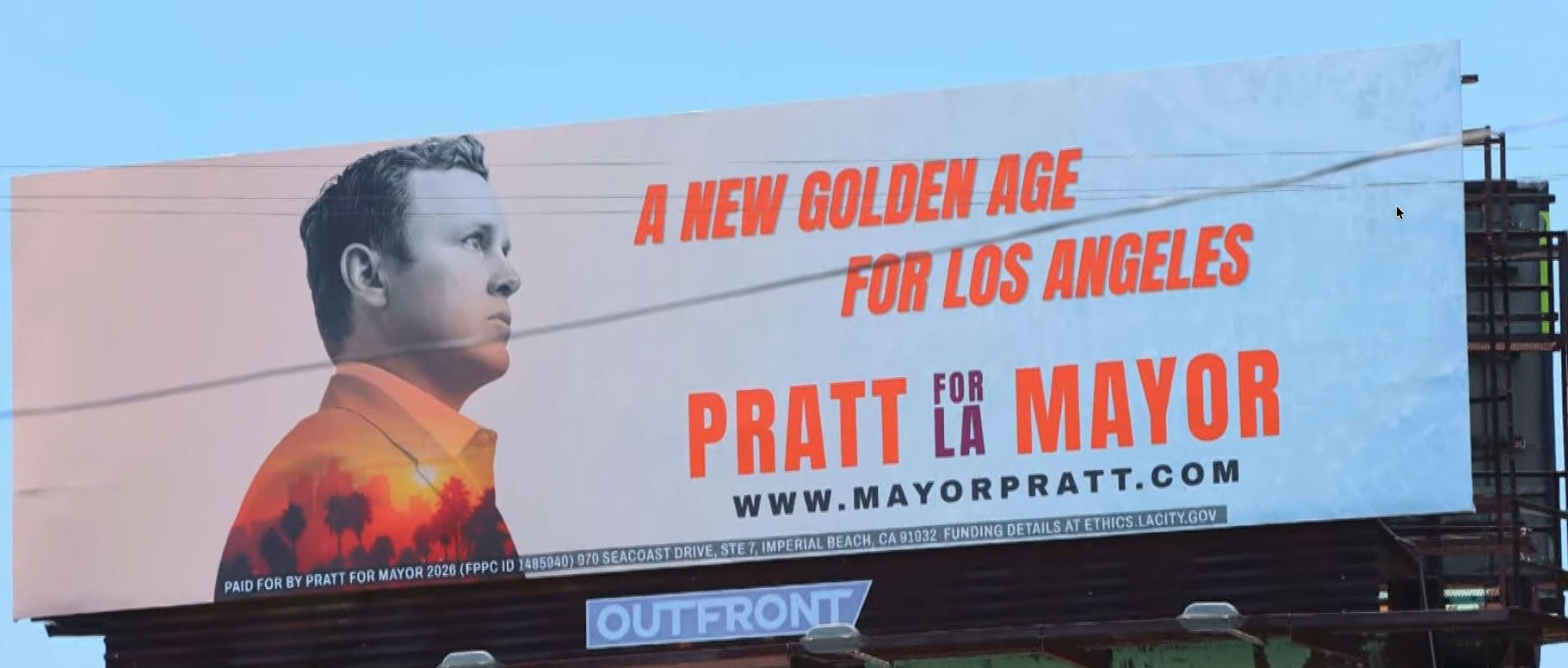
• Spencer Pratt responds to L.A. mayoral race loss, says ‘it’s war’ in new video (6-12-2026)
[Sore loser or holy warrior? There’s no grace here, no tone of building bridges, coalitions – just demonization … note that the Palisades Fire destroyed his home.]
LOS ANGELES (KABC) — The Republican and former reality television personality Spencer Pratt responded to his loss in the Los Angeles mayoral primary in a video posted Friday morning, saying “you have no idea how bad things are about to get for the city.”
In the video captioned “Saving LA-Phase III” posted on his social media, Pratt said he is not leaving town and is going to stay active in local politics.
“You thought you could get rid of me that easily?” Pratt said. “I didn’t get in this for political power, I got in this to expose this corrupt machine and nothing’s changed.”
“And now I don’t have to worry about offending CNN viewers. I don’t have a campaign to hamstring me now. It’s war,” he added.
The three-minute video featured clips from movies, news broadcasts and even a UFC fight. Much of it consists of Pratt painting Los Angeles as a negative place to live.
“Angelenos are now stuck with two morons responsible for all their problems and now have to choose between dumb and dumber,” Pratt said, as images of Raman and Bass appeared.
He also said that “every problem that plagues Los Angeles because of these two corrupt communists is going to accelerate” under their leadership.
Pratt’s goal has not changed, he said, and he remains focused on stopping “these commie animals.”
AI Overview
Sweeping away homelessness in Los Angeles revolves around two primary multi-agency initiatives aimed at clearing encampments and transitioning unhoused individuals into interim and permanent housing.
• The primary pathways to bring individuals indoors include:
Inside Safe: A citywide emergency initiative spearheaded by Mayor Karen Bass that relocates individuals directly from encampments into temporary housing (like hotels/motels) while offering supportive services.
Pathway Home: An encampment-based LA County program that partners with the Los Angeles Homeless Services Authority (LAHSA) to provide interim housing, remove unsafe structures, and secure rental subsidies for permanent housing.
Caltrans SAFE: A state-level task force working with local jurisdictions to clear encampments near highways and provide social services and drug treatment.
• How to Request Assistance or Report Encampments:
To report an encampment in your neighborhood, submit a request through the Los Angeles Homeless Outreach Portal.
For encampments located on state highways, freeways, or on/off-ramps, report the location using the Caltrans Service Request Form.
To request a city service (such as bulky item pickup or sidewalk cleaning after a sweep), use the MyLA311 System.
• LA Times > “Progress on Skid Row still falling short” by Steve Lopez, Columnist (7-9-2026) – There’s been a lot of focus on the area, but it resembles its old self.
• LA Times > “Spared from life on streets again” by Doug Smith (7-15-2026) – New funds [for housing subsidies] and a waiver keep thousands in housing in L.A. County, officials say.
• LA Times > “Schools are ground zero for fighting homelessness” by Margaret Olmos, Guest Contributor, Senior Director of Education Resource Opportunity and Equity at the National Center for Youth Law (7-15-2026) – California’s historic investment of more than $100 million should become a model for the rest of the country